Technical Specifications
| Material | Bins are often made from high-grade, durable plastic (like polypropylene or HDPE) that is rust-free, easy to clean, and often UV-resistant for both indoor and outdoor use. Puncture-proof containers (PPCs) are mandatory for sharps waste. |
| Leak | proof and spill-proof: Containers and the accompanying bags (which should be non-chlorinated plastic) must be leak-proof to contain liquids and prevent spills. |
| Secure lids/closures | Lids must fit securely to prevent odors and stop pests or vermin from accessing the waste. |
| Hands | free operation: Many bins, especially in healthcare settings, feature a foot-pedal mechanism to minimize direct contact and enhance hygiene. |
| Mobility | Larger bins (55L, 120L, etc.) often include sturdy, non-rusting castor wheels for easy and noiseless transportation within a facility. |
| Labeling and Marking | Every container must be clearly labeled with the universal biohazard symbol and information on its source (e.g., specific ward or lab). |
| Capacity | Bins come in various sizes (e.g., 2.5L, 6L, 15L, 55L, 120L) to match the waste generation rate of the area they are placed in, ensuring they do not overflow between collection cycles. |
| Color | Coding and Associated Waste |
| Yellow | For human anatomical waste, animal waste, microbiology/biotechnology waste, soiled waste, discarded medicines, chemical waste, and chemotherapy waste. Examples include human tissues, blood bags, and used dressings. This waste is typically treated by incineration or plasma pyrolysis. |
| Red | For contaminated recyclable plastic waste like syringes (without needles), IV tubes, catheters, and gloves. This waste is autoclaved or microwaved, then shredded and recycled. |
| White | For waste sharps and metals, such as needles, scalpels, and blades. These require autoclaving or dry heat sterilization before mutilation or encapsulation. |
| Blue | For glassware and metallic implants, including broken glass and medicine vials (excluding those with cytotoxic waste. This waste is disinfected or autoclaved before recycling. |
| Black (or Green/General waste bins) | For non-biomedical and general waste like office stationery and kitchen waste. This is disposed of in a municipal landfill or composted. |
Similar Products
View all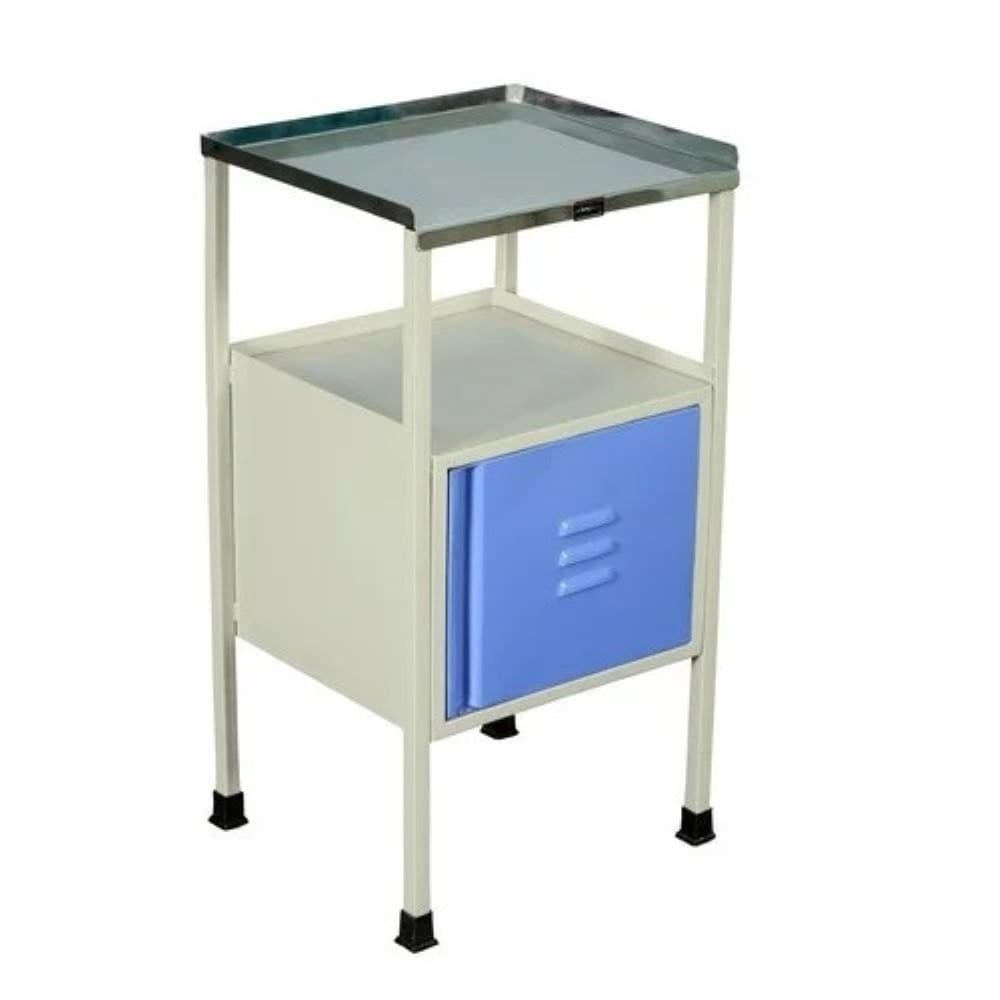
BEDSIDE LOCKER ORD
An MS bedside locker is a small storage unit, typically placed next to a patient's bed in a hospital...
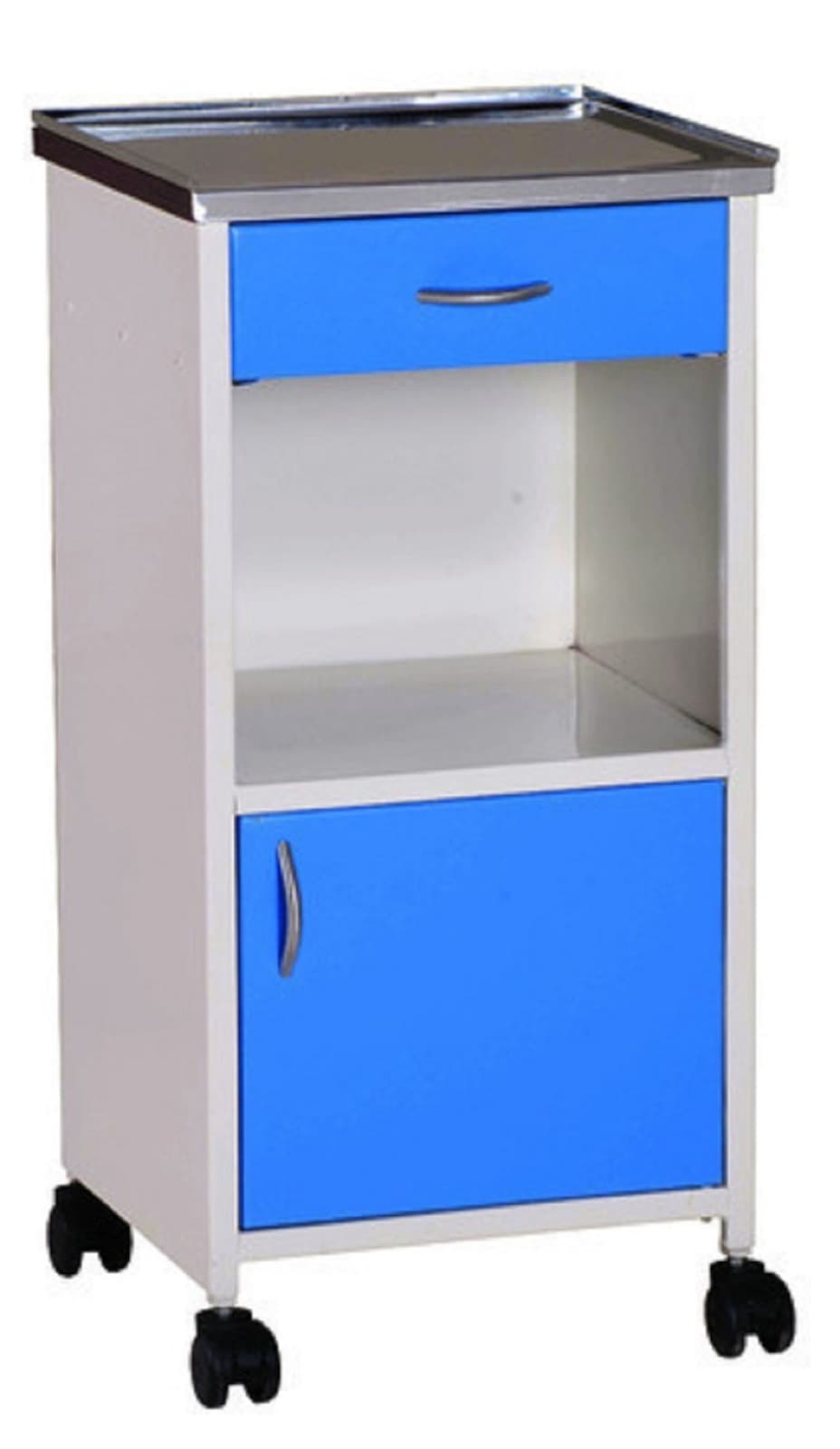
BEDSIDE LOCKER DLX
A deluxe bedside locker is a durable, multi-compartment storage unit, typically used in medical faci...
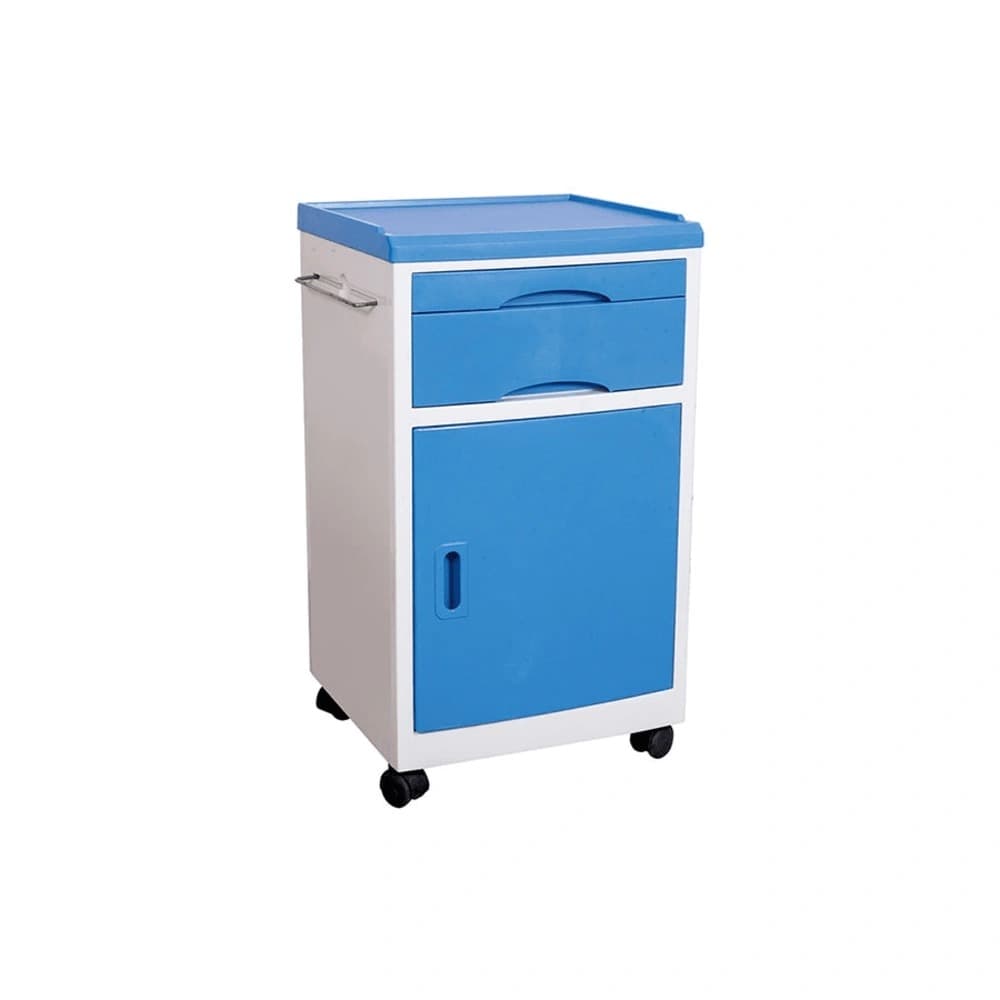
BEDSIDE LOCKER ABS
A bedside locker ABS is a compact, durable storage unit used in healthcare settings, made from Acryl...